








By Gene Ching
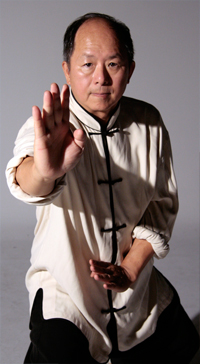 I feel awkward taking credit for this story for two reasons. The first has to do with the subject matter. As a martial arts writer myself, I have long found in Dr. Yang Jwing-Ming's work a tremendous source of personal inspiration. When I was a fledgling freelance writer, intelligently-written books on Chinese martial arts were few and far between. Back then, most books made scant offerings: a few pages of introduction, typically a recounting of apocryphal Shaolin legends, followed by a short discussion of the author's lineage and style. The rest were "how to" photos and captions. Dr. Yang's books were thick and informative. Not only did they expand upon those stereotypical introductions, they provided some serious background research and insight on the topic. For the literate martial artist, Dr. Yang's books were a breath of fresh air. They really opened the door to deeper knowledge for practitioners who only read English. I still reference his books today. In fact, if you were to excavate the perpetual avalanche of work piling my desk, you'd find more books by Dr. Yang than any other English-language author. So for me to interview Dr. Yang was like the student interviewing the founding grandmaster.
The interview itself was the second bit of awkwardness. Typically, the process of interviewing a master is a lot like playing ping pong, swatting ideas back and forth, looking for that revealing dramatic volley. Many masters aren't accustomed to the interview process. Why should they be? And frankly, I'm no Letterman or Oprah. So there's a lot that goes into most cover story interviews - as well as a lot of editing - to make the conversation flow for a decent read. But with Dr. Yang, I only asked two questions, and he just ran with them in a cohesive improvised monolog. What's more, he anticipated most all of my follow-up questions. So I feel a little guilty because all I really did was transcribe his answers. It all started with one question.
What do you see as the biggest challenges facing traditional Chinese martial arts today?
This biggest problem is lifestyle has changed. Trace back how traditional martial arts were developed. They developed because they think about the ancient society. 99.99% of the people were farmers. They don't have such things as industrial business like today. It ended up that in the daytime, people had a lot of time. Everyone had a small piece of land, and in their extra time they practiced martial arts. My White Crane master, he was a farmer. I asked him, "How long did it really take you to take care of the land, take care of the farm?" He said, "A couple hours a day." I asked, "What did you do for the rest of the time?" He said, "Well, I played chess. I practiced martial arts. Talk to friends." Ancient people had more time to enjoy life than today's people.
People you see today, for example, in the industrial life, you get up in the morning, you go to work, you go to sleep - ain't got no life. This only happened in modern life, in modern times. It actually started in the last century. Now this has become a big problem. The big problem is this art was developed in ancient times by people who had time and had patience.
When people have time and patience and commitment, then they can reach high levels. Classical music is the same thing. In classical music today, we've encountered a big problem. For classical music today, it's hard to survive. For example, a few years ago I was in Vienna. Remember Vienna's choir, Italy's choir, is the most famous in the whole world. I talked to them and they say that every town puts one applicant - they chose one. But today, they can't even find people that want to apply. Because that lifestyle is totally different and people don't want to make commitments like ancient times, (don't) want to reach high levels. Everything is what I call "McDonald culture." Everything is quick, quick, quick. This kind of mental influences heavily destroys traditional martial arts as well. So that becomes a big problem.
In ancient times, anybody who wants to learn martial arts, you'd spend ten years. Ten years and you still learn the basics. You take the rest of your lifetime to live out. Today there's no difference - you play piano, you play violin, ten years, it's all basic and not until there, you get to the advanced level. You see the very famous pianist or violinist, they spend thirty years and they reach a very high level. The question is, can you find those committed people today? That becomes the hardest problem. For example, for my ten-year program, the hardest part is to find qualified students that have that preparation psychologically, and are willing to jump out of today's society and to enter the mountain, to accept the training. Traditional martial arts were developed under ancient situations. So that's why students, they can go to the mountains, they can train there without too much distraction from modern society. And that's why art can reach deep. But today, you don't.
It took me a long time to figure out. How can I preserve the arts without allowing it to get lost? For example, my generation - I was born in 1946 - I was between the old society and new society, especially in Taiwan. So because I still had old society, I could still see my masters' levels when they train. And at the same time, I can enter the new society, because I also experienced the new society as an engineer. So that's why I can see both sides clearly - what happened. And now, how can we use today's mentality to train the ancient way and to preserve the art? It's impossible, because between me and my master, I already lost half of the knowledge. My master spent 23 years with his master. They trained together and practiced together, because it's their life. So that's why my master always said, "You are not really learning martial arts, you are learning the way of life," because you always get into it and that's your life. So 23 years to him is nothing. But today, 23 years, it's a waste. Twenty-three years is so long. But think about it, my master lived with his master for 23 years. How can I train with him only 13 years - and those 13 years we didn't even live together; I only trained in the night time - how can I reach the same level as my master? Only two words - no way. I didn't learn half of what he knew and he took it with him.
That's what makes me so upset, because in 1976 he passed away. In '74, I came to the United States and '76 he passed away. I didn't even know. When my mother came in 1978 before my first son was born, my mother told me, "Your master passed away two years ago." My master lived in the mountains. He couldn't read. He couldn't write. Everything came from my family and passed a message to me. My mother had no mail to deliver, nothing. And I asked my mom, "Why you didn't want to tell me?" My mom asked me a very serious question. She said, "What would you do if I told you your master passed away?" I couldn't answer. My mom knew if I knew that, I would just quit my school and go home for my master's funeral. My mom said, "That's the reason I didn't want to tell you. To me, your school is more important - your PhD is more important - than your master's funeral." It was my mother's love to her son. I understand. So in 1979, I got my first vacation. I went back. Right in front of my master's tomb in the hot summer, and his two kids with me, because I didn't know where was the tomb, so his two kids took me to his tomb.… I just sat there in the hot summer. I feel… I feel so sad. Why so sad? It's not the death. It's the knowledge. He spent all his lifetime on knowledge - he took with him - is dead. How do we get it back? No way I can get it back.
See, that's why that time people asked me, "Dr. Yang, how come you produce so much DVDs and videotapes and books, whatever?" I never hesitate to publicize it. I never hesitate to tell what is real. I know there are Chinese masters that say, "Oh, this is top secret. I cannot tell you." To me, there is no such thing called "secret." "Secret" is dying. Where is the secret? You want to preserve it. It's not really something secret. So for that reason, I swore right in front of my master's tomb. I said, "As long as I'm alive, I will try my best to keep these arts alive." That was 1979. In 1981, my first book was published. When I came back, I started writing. I fulfill my promise to my master.
And so when I was fifty, I started to think. In 1984, I quit my engineering job. I wrote all these books. After teaching twenty years, everything is shallow. Why shallow? It's not because the knowledge is not there. It's because people don't have that kind of lifestyle. They don't have that kind of commitment to get in deep. They don't understand the deep aspect of the martial arts. All those things that they see are the forms. Like for example, take taijiquan. The taijiquan they see so far is forms. What is the essence behind the forms? What is the internal side of taiji? Very few people know. But those people who know, they keep it a secret. But what is the secret? Everything becomes surface. That's why I call it McDonald culture, everything quick, quick, quick. Then I started to wake up. When I was fifty - that was thirteen years ago - I started to wake up and say, "No, I was wrong." I tried to preserve the art for twenty years through writing, publishing, whatever. Everything is still shallow. My students studied with me for twenty years. They didn't even pick up half of what I know. And compare me to my master - I don't know half of what he knew. Just think about it. Within fifty years, the arts dropped down from 100 to 25%.
Who's fault? Is it society's fault or the person who knows the arts and doesn't share with other people? He doesn't really carry that obligation - because that's an obligation. Remember I learned from three masters. I didn't pay a penny. In the ancient times, the master teaches students, it's not because I want to make money. It's because it's an art - continue pass down. It's from the heart. You teach students from the heart, there's no money involved. The only time my classmates and I spend money is my master's birthday and Chinese New Year. We chip in some money and buy some gift. A little bit of money. It ended up always his wife would cook a big meal for everyone. We ate more than what we spent. That's the Chinese way. You look at the ancient times. A lot of masters, they don't even take money from students at all because they want to share these arts to preserve it.
Today I want to take students up the mountain for ten years of training. They cannot find a job. They cannot make money. How are they going to survive? How am I going to survive? That's the two points. That's why the first thing I set up a non-profit organization. It has to be non-profitable because then people know, ok, this is aiming to preserve the art. When I have money, I can spend money for the students. And the second, if I don't have no money, for example, now we don't have too many people sponsoring. So I have to offer seminars every summer. The seminar money is put in to try to help. Now this is the second year. It's working nice. Of course, if we had more money, it's better. But even now, we don't have money, we make it happen. I believe I can make it happen. Before, maybe I was still wondering. But after one year, I see I can find some - very few - committed students. They really want to commit their life there. And they want to become professional martial artists - preserve it to the ancient way.
One thing the students always concerned. They say, "After ten years training, how are they going to survive?" You are going to teach traditional Chinese martial arts. But most people, they don't want traditional Chinese martial arts. Like most people, they don't want classical music. All they want is rock music. But I told them, "Look, you learn martial arts. It's for what? Is it for money-making or because you love the arts?" I showed them an example. Today classical music still survives. You go back 200 years ago. Classical music, they make big money out of it. Today, classical music still survives, still the quality is very high, but only fewer students. Why does it still survive? That's because some people, they say, "No, my life is the art. My life is not for money." I told the students that if you think that in the future you're going to make big money after this ten-year program, then you got the wrong place. You are here because in your deep heart, this is part of your blood. It's what I want. It's the same thing as master. Because I think this is part of an art, my passion is there. So I want to make it happen. If you have the same dream as me, yes, you enjoy. Otherwise, you're not going to enjoy. All the time, you'll worry. But I say we try to do whatever we can. That's why they have to learn writing - it's very good that Kung Fu Tai Chi continues to help them. And they have to learn how to produce DVDs. Because the question is what I am doing - I won't say I'm very successful, but I'm happy about my life. I survived with a very nice life. I think they can survive the same way, as long as they are willing to do it. The question is, if they don't have that commitment, it won't work. If they have commitment, they'll reach a level of good quality in the future. They'll survive.
This is a test. I always believe that if I can make this program happen, I can inspire a lot of Chinese masters, or even foreign masters who have learned Chinese martial arts, to try and get back by copying the same thing. And I believe the arts can be preserved. I had to think of a possible way. I couldn't let it die. So I said to myself, until 73. After 73, I step back (laughs). I still have nine years to go. So to me now, it's not for money. It's not for glory. It's nothing. It's the art. We cannot let it die.
What is the value of the traditional arts today?
We call it discipline. Today's young generation or today's industry, you can see, loses patience because everything is McDonald culture. They don't have patience. It comes back to the end point: what is the meaning of life? The meaning of life is not just McDonald culture. Every day you go, every day you go - ask yourself, "What is the meaning?" For example, in engineering, you make big money. I have many friends, they are all engineers. They are all my age now. I ask them, "What's the meaning of your life?" Then they think a lot. They think a while and they say, "I got no meaning." I say, "That's right. You got no meaning. Because all your life - thirty years - you are the slave for the industry. You got no life. Everyday you wake up, go into the traffic jam and then go to make money, and then go home. You're so tired. You sleep. On the weekend, you try to numb yourself. And then pretty soon, thirty years have passed. I want you to trace back. Look thirty years. How much you feel you have your life?" Everyone tell me, "No, I didn't have life." Company owned their life.
What is life? Everyone has one lifetime here. I don't know about reincarnation, but at least in this lifetime, do I use every minute the way I want? Does life control me or I control life? In traditional martial arts, my master always told me one thing. He said, "You learn this. It's not really martial arts. You learn the way of life." That's a question I keep pondering. What is the meaning of the "way of life?" I pondered for a while. Until I came to the United States in the 1970s, because after 13 years, I kept pondering. What you mean "the way of life?" I know it trained patience, and trained everything, but between them, there's something missing. How can I train martial arts and understand the meaning of life? My master gave me a very simple answer. He say, "You train two things when you train martial arts: your higher level of awareness and higher level of alertness." That's required for martial artists. And this awareness and alertness makes your mind so sharp you can understand things other people cannot understand. Because you have a higher level of awareness, you can catch a lot of tiny things that exist in this society that other people don't know. They don't catch. Alertness - you can catch your opportunity other people cannot catch. That's a requirement for martial arts. That's the same requirement for life. You have these two and you understand the meaning of life higher than other people.
That's 1974. Now I start telling the students the same thing. I don't know if they understand yet because when my master told me the same thing, I couldn't understand. But now I start to understand. Because the final goal is not to say how much glory you got, how much money you make. It's how much before you die - that instant, that moment - you say, "Did I waste my life or not?" If in that moment you say, "No, this life - I didn't waste my life." I can smile. I can die.
This one story my White Crane master told us. Most of my classmates didn't understand. I didn't understand either. There's a very famous Chinese archer called Yang Youji. When he was a teenager, he was the most famous archer in the whole village. Because of that reason, he was so proud of himself. He said, "I'm the best in the whole village!" So proud of himself! One day, he was in the study room and he heard from outside, "Dong! Dong! Dong! Dong!" That means from Chinese customs there's an oil man - the old man sells oil. He was so curious - try to see this old man sell oil. He come out to take a look. The old man put the customer's jar - the jar, the hole is about coin size - on the ground. The old man used a ladle to scoop it and he poured it all the way in without touching the edge. He said, "Wow!" because he knows it's not easy because he's an archer. He knows how still he has to be, how concentrated he has to be. It's not easy. He looked at him and said, "Hey, how did you do this?" The old man said - because everyone knows this boy - he said, "You want to know more?" The boy said, "Yeah, yeah, yeah!" "Go and bring a bench." The boy went into the house and brought a bench. Then the old man took a coin. You know, Chinese coins have a hole inside - tiny, tiny hole inside. He put the coin on the top of the hole of the jar. He scooped the oil. He stood on top of the bench and dripped it through the tiny hole without even touching the coin. Now, this boy suddenly realized it's impossible. He asked the old man, "How did you do that?" The old man told him one thing - it's a fact because if you understand, you understand. Because you can see, you can see. The old man said, "There's no difference with your archery. The only thing is I practice more. You are better than others because you practice more. There's nothing to be proud." That hit him hard. He suddenly realized. Since then, he practiced so hard that when he reached the late twenties, he became the most famous archer in the whole country. And he became the emperor's bodyguard because he's so famous. Then one day, he just ran away. He's scared. He disappeared. Nobody can find him. After thirty or forty years, one of his best friends kept looking for him. And he discovered he was in Tian Mountains. Tian Mountains are in Xinjiang, on the west side, near Tibet. The old man said, "Hmm. I want to verify that this is the person." His friend is an old man too - sixties, seventies. He bring the bow and arrow all the way, travel from the capital all the way there. When the old man come to the house and see him, they recognize each other. And they're so happy. The old man put the bow and arrow on the top of the table. He looked at this old man and said, "What funny thing you carry. I've never seen that in my whole life." You know what his friend said? He said, "Wow. You must be the best archer I've ever seen because you already past the stage of archery." At that time, I didn't understand what my master said. Now I start to understand. All that learning and training process is only one thing for your self. All this training, you can learn piano. You can learn violin. You can learn anything. To reach this level, you have to conquer yourself. Through that conquering, you understand what's the meaning of life. But once you reach here, it's meaningless. It's empty.
Now, today's society, they move this away. No challenge. Everything provide to you. You ask today's young generation. In my generation, we asked the same question. Are you happy with your life? Do you understand what is life? Four of out five would say, "No problem. I understand." Today, ask five, maybe two or three are confused about life. They got no challenge. Everything provide to them. And today you look at how many young people - teenage - commit suicide. They are from rich families. They have everything they want. Today, whatever they have, to us in that time, is heaven. But to them, it's hell. That's because this important part is experiencing the life that today's society takes away. So my job, with the ten-year program - take them to the mountains. They have to experience this. That's why I keep laughing. It's torturing to today's generation. (laughs) They have to learn. And they have to experience the pain.
The first beginning years are difficult. That's why Mike quit. He said, "No, that's not what I want." He go back to "the Matrix." But the other four, now I can see they start to develop the feeling. And they start to appreciate. I can see it can be done. That's why after one year, I'm more confident than in the beginning. And especially the second group - nice. So far. But only two weeks now.
It's important because we have to provide for them. I have a greenhouse. I have a garden. The greenhouse plant - take it outside too fast and it die. Today's whole generation grow up in a greenhouse. For example, you have to be in an air-conditioned house. You have to have a car. You don't walk. They grow up there and they cannot get out. They cannot survive. And in this case, what's the meaning? They lost it. Today's society takes them away. That's why I believe kung fu, because after almost my life now, I realize what make me become today as I am today. That's because I train martial arts. Because I start thinking about if I were an engineer, all the time, without quitting my engineering today, if I looked back, would I be happy today? No. I would be as unhappy as all my classmates. Not even one said they are happy. A lot of them got laid off. One of my best friends, an engineer, 57, got laid off. They call 'forced retired.' It's high pay. He got a PhD from Chicago University and he worked for this company, I won't say which company, and they just force him. He struggle, struggle, very unhappy, until 61-62. He cannot find a job - stay at home and do nothing. Finally he got leukemia and passed away. And now I have many, many engineer friends, all get laid off now. And only in their 50s. It's not even 65. Because industry, they use you. If you are an engineer, yes, you are young, I use you. Now you are in your 50s. The salary I pay you I can hire two Indian, two Chinese, new engineer. They work harder than you. They have updated news, updated information. You are the old generation. You get a salary. You occupy a position. You're out. What are the royalties? Tell me. There are no such things called royalties in today's industry. It's called reality. And people don't wake up.
| Discuss this article online | |
 |
Kung Fu Tai Chi Magazine March April 2010 |
Click here for Feature Articles from this issue and others published in
2010 .
About
Gene Ching :
 To learn more about the YMAA Retreat Center, visit
http://ymaa-retreatcenter.org. To read
about his ten-year program, see Dr. Yang and His
Disciples in our January February 2009 issue and Dr.
Yang's Disciples: Year One in our January
February 2010 issue. Articles by Dr. Yang's
disciples may be found in the May/June,
July/August, September/October and
November/December issues of 2009.
To learn more about the YMAA Retreat Center, visit
http://ymaa-retreatcenter.org. To read
about his ten-year program, see Dr. Yang and His
Disciples in our January February 2009 issue and Dr.
Yang's Disciples: Year One in our January
February 2010 issue. Articles by Dr. Yang's
disciples may be found in the May/June,
July/August, September/October and
November/December issues of 2009.
 Print Friendly Version of This Article